

Gaucher Disease

Summary
- What it is: A genetic condition where a fatty substance builds up in organs and bones due to a lack of the glucocerebrosidase enzyme.1
- Jewish Connection: Type 1 is the most common form; approximately 1 in 15 Ashkenazi Jews is a carrier.2
- The Parkinson's Link: Carriers do not have Gaucher symptoms but have an increased risk of developing Parkinson's disease later in life.3
- Treatment: While there is no cure, Enzyme Replacement Therapy (ERT) and Substrate Reduction Therapy (SRT) effectively manage symptoms for Type 1.1
- Proactive Planning: Genetic screening is the only way to know your carrier status and understand reproductive risks before or during pregnancy.2 Get screened and start your journey to knowing your carrier status with jscreen today.
What is Gaucher Disease?
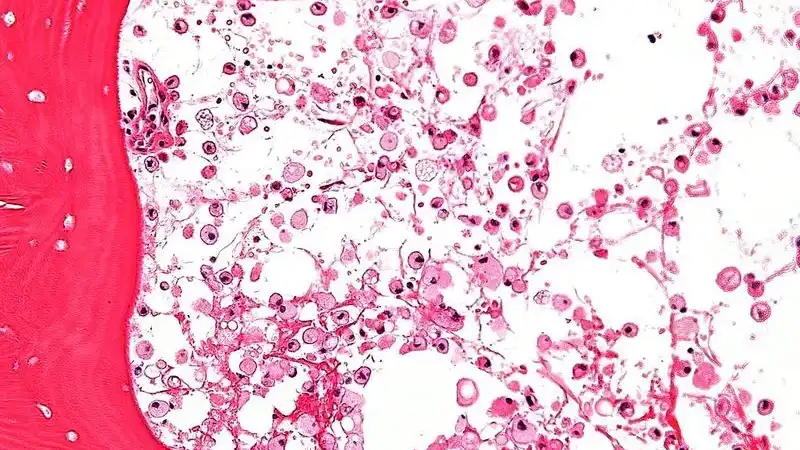
Gaucher disease is a genetic disorder caused by mutations in the GBA gene. These mutations prevent the body from producing enough of an enzyme called glucocerebrosidase, which breaks down a specific fatty substance (glucocerebroside). When this substance isn't broken down, it accumulates in the cells of the liver, spleen, and bone marrow, leading to a wide range of symptoms.1
Types of Gaucher Disease
- Type 1: The most common form. It affects the organs and bones but does not typically involve the brain or spinal cord. Symptoms can appear at any age and may include bone pain, low bone density, and an increased risk for broken bones. People with type 1 Gaucher disease often have an enlarged liver and spleen, as well as a lowered number of red blood cells and platelets (anemia). This can lead to the person feeling tired and weak, and more likely to have bruising and excess bleeding.1
- Type 2: A rare, severe form that begins in infancy (usually by 3–6 months). It involves rapid neurological decline and is generally life-limiting by age. Neurological symptoms of type 2 Gaucher disease can include limited cognitive and motor development, breathing problems and difficulty swallowing, and tightening of the muscles. As the nervous system deteriorates, children with type 2 Gaucher may develop dementia and the inability to coordinate movement.1,2
- Perinatal-Lethal Form: A severe form of Gaucher disease type 2, often leading to death before or shortly after birth. It is characterized by severe skin abnormalities, fluid accumulation, lowered numbers of red blood cells and platelets, and rapid neurological decline.3
- Type 3: Is characterized by neurological symptoms and systemic organ involvement, but with a slower progression of neurological symptoms than in type 2. Individuals often live into adulthood.3
- Cardiovascular Form: A rare and severe subtype of Gaucher disease type 3,which primarily affects the heart, causing calcification (hardening) of the heart valves. It may also involve enlarged liver and spleen, bone pain and fractures, difficulty controlling eye movement, and clouding of the corneas.3
How Common is Gaucher Disease?
Type 1 Gaucher disease is the most common form of the disease and is particularly prevalent in the Ashkenazi Jewish community. Current data indicates that as many as 1 in 10 individuals of Ashkenazi Jewish descent are carriers, and as many as 1 in 450 is affected by the disease.2,3,4 Among the general population, the disease is much more rare, affecting as many as 1 in 40,000 people.4
How Inheritance Works
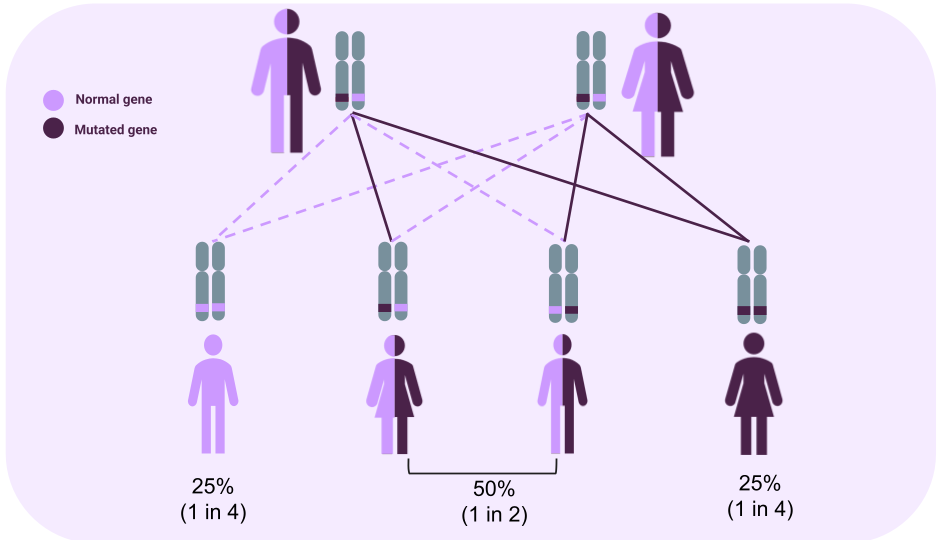
Gaucher disease follows an autosomal recessive pattern. This means a child must inherit two non-working copies of the GBA gene (one from each carrier parent) to be affected with the condition.
Carriers are individuals with one mutated copy of the GBA gene. They typically do not have Gaucher symptoms but have a 5% to 10% lifetime risk of developing Parkinson’s disease later in life.5
When two carriers have a child, there is a 25% chance that the child will inherit no working copies of the gene, leading to Gaucher disease. There is a 50% chance that the child will be a carrier like the parents and a 25% chance that the child will inherit two working copies of the gene.2
Not sure if you're a carrier? jscreen's at-home reproductive carrier screen tests your carrier status for 260+ conditions (including Gaucher disease) — no doctor appointment needed. Get screened at jscreen.org.
Why do genetic testing for Gaucher disease?
Genetic testing plays a critical role in diagnosing Gaucher disease and identifying carriers. Early diagnosis allows for quicker access to treatments that can slow down the disease’s progression. Also, genetic testing is vital for family planning, as knowing one’s carrier status can help prospective parents make informed decisions and seek medical intervention as they plan for a healthy family. You can take the first step and order your screening kit from jscreen here.
Treatment Options
Recent medical advancements have expanded the options for managing Type 1 and Type 3 Gaucher disease:
- Enzyme Replacement Therapy (ERT): Administered via intravenous (IV) infusion every two weeks to replace the missing enzyme and helps stop the buildup of the substances that would accumulate in the body in a person with Gaucher disease. ERT is effective in treating disease symptoms and preventing bone and organ damage. However, ERT does not treat the neurological symptoms found in types 2 and 3.6
- Substrate Reduction Therapy (SRT): An oral medication that reduces the amount of fatty substance the body produces, making it easier for the existing enzyme to keep up.6
- Symptom Management: Includes bone density treatments, blood transfusions for anemia, and joint replacement surgery if bone damage is severe.6
Prognosis
With modern treatments, individuals with Type 1 Gaucher disease can expect a normal life expectancy and a high quality of life. The prognosis for Types 2 and 3 remains more challenging due to the neurological components that current therapies cannot yet address.3 Those with the perinatal-lethal form of Gaucher disease often die before or shortly after birth, and the prognosis for those with the cardiovascular form of Gaucher disease depends on the success of valve replacement surgery and treatment of other symptoms.6
References
- National Organization for Rare Disorders (NORD). Gaucher Disease. Updated January 2024. Accessed April 21, 2026. https://rarediseases.org/rare-diseases/gaucher-disease/
- Mayo Clinic. Gaucher disease: symptoms, causes, and carrier screening. Published June 12, 2024. Accessed April 21, 2026. https://www.mayoclinic.org/diseases-conditions/gauchers-disease/symptoms-causes/syc-20355546
- MedlinePlus. Gaucher Disease. National Library of Medicine. Updated April 2024. Accessed April 21, 2026. https://medlineplus.gov/genetics/condition/gaucher-disease/
- National Gaucher Foundation. What is Gaucher disease? National Gaucher Foundation website. Published 2024. Accessed April 21, 2026. https://www.gaucherdisease.org/about-gaucher-disease/what-is-gaucher-disease/
- Cleveland Clinic. Gaucher Disease: Type 1, 2, and 3. Published February 15, 2025. Accessed April 21, 2026. https://my.clevelandclinic.org/health/diseases/16234-gaucher-disease
- National Gaucher Foundation. Treatment Options: ERT and SRT. Published 2024. Accessed April 21, 2026. https://www.gaucherdisease.org/living-with-gaucher-disease/treatment/