






Most stomach cancer happens due to a combination of chance, environmental factors and familial risks. When an inherited gene change increases the risk of developing stomach cancer, early detection becomes extremely powerful. Gastric cancer genetic testing identifies the gene changes most commonly linked to hereditary stomach cancer, empowering you and your healthcare provider to build a proactive monitoring plan before symptoms appear.


Understand Your Hereditary Risk
Hereditary diffuse gastric cancer syndrome, caused by mutations in the CDH1 gene, contributes to an estimated 1–3% of all stomach cancer cases.¹ In such cases, stomach cancer will often develop earlier than the average age of diagnosis. It can be difficult to catch on imaging because it spreads through the stomach lining and often appears benign in early stages, rather than forming one visible tumor. Knowing your inherited risk through genetic testing for stomach cancer means you and your doctor can set up the right screening plan, or discuss preventive options, long before symptoms appear.
The Main Hereditary Gastric Cancer Syndromes
Most hereditary stomach cancer falls into one of two well-understood syndromes. Both are identifiable through gastric cancer genetic testing, and both have clear management options when caught early.
Hereditary Diffuse Gastric Cancer (HDGC) Syndrome
Caused by inherited changes in the CDH1 gene, HDGC is the most common cause of hereditary stomach cancer. It leads to an aggressive, fast-spreading form of stomach cancer that's often missed on standard endoscopy and other imaging, along with a higher risk of a type of breast cancer called lobular breast cancer in female carriers. People with a CDH1 gene change face up to an 80% lifetime risk of stomach cancer.¹
Lynch Syndrome
Lynch syndrome is caused by inherited changes in DNA mismatch repair genes: MLH1, MSH2, MSH6, PMS2, and EPCAM. It is better known for increasing risk of colorectal and uterine cancers, but individuals with Lynch Syndrome also have a higher risk of stomach cancer. For people with a change in the MLH1 or MSH2 genes, the lifetime risk of gastric cancer can be as high as 8–16%.²
Who Should Consider Hereditary Gastric Cancer Testing?
Several personal and family history factors can point to an inherited risk worth exploring through genetic testing for hereditary gastric cancer.
A Personal Diagnosis (at a Young Age)
If you've been diagnosed with diffuse-type stomach cancer at age 49 or younger, genetic testing can help determine whether an inherited syndrome is involved, which can shape your treatment and help protect your family members.³ Under certain circumstances, a personal diagnosis at any age also warrants genetic testing.
Family History of Gastric Cancer
If two or more people in your family have had stomach cancer, with at least one of those cases being diffuse-type or one of them having been diagnosed at or under age 50, genetic counseling is worth considering.³ If three individuals have been diagnosed with stomach cancer in your family, genetic testing is also recommended regardless of the age at diagnosis.
Multiple Stomach Polyps
Developing many stomach polyps, especially at a young age, can be a sign of a hereditary polyposis syndrome like Peutz-Jeghers syndrome or juvenile polyposis syndrome, both of which raise stomach cancer risk and are detectable through genetic testing.⁴ Widespread stomach polyps can also point to GAPPS, a rare syndrome linked to a specific change in the APC gene.⁵
Key Genes Linked to Hereditary Stomach Cancer
Gastric cancer genetic testing covers the genes most strongly tied to inherited stomach cancer risk, from the most common cause to rarer polyposis syndromes.
The gene table shows a sampling of all of the genes included in the panel. The full gene list is available here. Results are reviewed by board certified genetic counselors.
The gene associated with hereditary diffuse gastric cancer syndrome. Carriers face up to an 80% lifetime risk of stomach cancer, along with a higher risk of lobular breast cancer in female carriers.¹
A Lynch syndrome gene. Carriers face an 8–16% lifetime risk of stomach cancer, along with a significantly higher colorectal and uterine cancer risk.²
A Lynch syndrome gene with a stomach cancer risk similar to MLH1, at 8–16%.²
A Lynch syndrome gene with a comparatively lower stomach cancer risk than MLH1 or MSH2, though still clinically relevant.²
The gene behind Peutz-Jeghers syndrome, which causes polyps throughout the digestive tract along with dark spots on the lips and mouth. Carriers face up to a 29% lifetime risk of stomach cancer.⁴
BMPR1A
These genes are associated with juvenile polyposis syndrome, leading to multiple polyps in the stomach and intestines. Carriers face up to a 21% lifetime risk of stomach cancer.⁴
Certain changes in the promoter region of the APC gene cause gastric adenocarcinoma and proximal polyposis of the stomach (GAPPS), marked by widespread stomach polyps and a stomach cancer risk between 7% and 30%.⁵
A DNA repair gene linked to hereditary ovarian cancer. Changes in BRIP1 raise the lifetime chance of developing ovarian cancer to an estimated 6%.⁶
Partners closely with BRCA2 in repairing damaged DNA. Changes in PALB2 raise the lifetime risk of developing ovarian cancer to an estimated 3–5%.⁹
Simple, from Home to Results

Order Your Kit
Register online and receive a saliva collection kit shipped directly to your home within a few days.

Collect Your Sample
Provide a simple saliva sample at home, following the easy step-by-step instructions included in your kit.

Lab Analysis
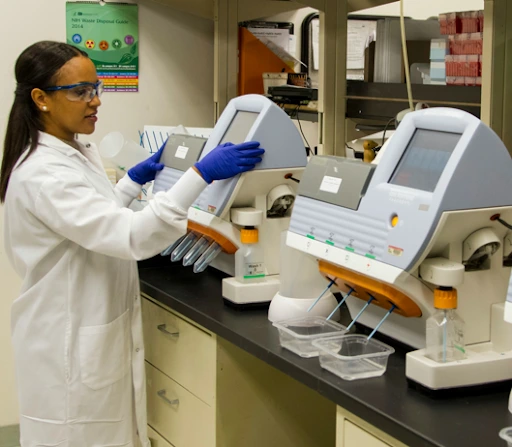
Your sample is analyzed at a CLIA-accredited laboratory using advanced sequencing technology across the full gene panel.

Receive Results
Receive your results within 3 to 4 weeks. You can choose to schedule a complimentary consultation with a certified genetic counselor to review your findings.
Costs and Insurance Coverage
Insurance Billing
Self-Pay Option
Get Genetic Testing for Stomach Cancer
References
1. Hereditary Diffuse Gastric Cancer (HDGC). Johns Hopkins Medicine website. 2024. Accessed August 10, 2026.https://www.hopkinsmedicine.org/health/conditions-and-diseases/hereditary-diffuse-gastric-cancer-hdgc
2. Lynch Syndrome. GeneReviews. NCBI Bookshelf. 2021. Accessed August 10, 2026. https://www.ncbi.nlm.nih.gov/books/NBK1211/
3. National Comprehensive Cancer Network. NCCN Clinical Practice Guidelines in Oncology: Genetic/Familial High-Risk Assessment: Colorectal, Endometrial, Esophageal, and Gastric. Version 1.2026. National Comprehensive Cancer Network; 2026. Accessed August 20, 2026. https://www.nccn.org/professionals/physician_gls/pdf/genetics_ceeg.pdf
4. Gastric Cancer. StatPearls. NCBI Bookshelf. 2024. Accessed August 10, 2026. https://www.ncbi.nlm.nih.gov/sites/books/NBK459142/
5. Sarmiento Irizarry R, et al. Gastric Adenocarcinoma and Proximal Polyposis of the Stomach in a Hispanic Pediatric Patient With APC Gene Variant c.-191T>G. PMC. 2023. Accessed August 10, 2026 https://www.ncbi.nlm.nih.gov/pmc/articles/PMC10191560/