


21-Hydroxylase Deficient Congenital Adrenal Hyperplasia (CAH) Screening


21-Hydroxylase Deficient Congenital Adrenal Hyperplasia (CAH) is an inherited condition that affects how the adrenal glands make important hormones.¹ It's the most common form of CAH, accounting for about 95% of all cases.¹ Its milder form, called nonclassic CAH, is more common in several communities: Up to 1 in 27 people of Ashkenazi Jewish descent are affected, along with about 1 in 53 Hispanic people and 1 in 62 people with roots in the former Yugoslavia.² Carriers have no symptoms, so many people don't know they could pass a genetic mutation on to a child.¹ A carrier screen for 21-Hydroxylase Deficiency checks the CYP21A2 gene ahead of time, so you can understand your risk before pregnancy.
What Is Congenital Adrenal Hyperplasia?
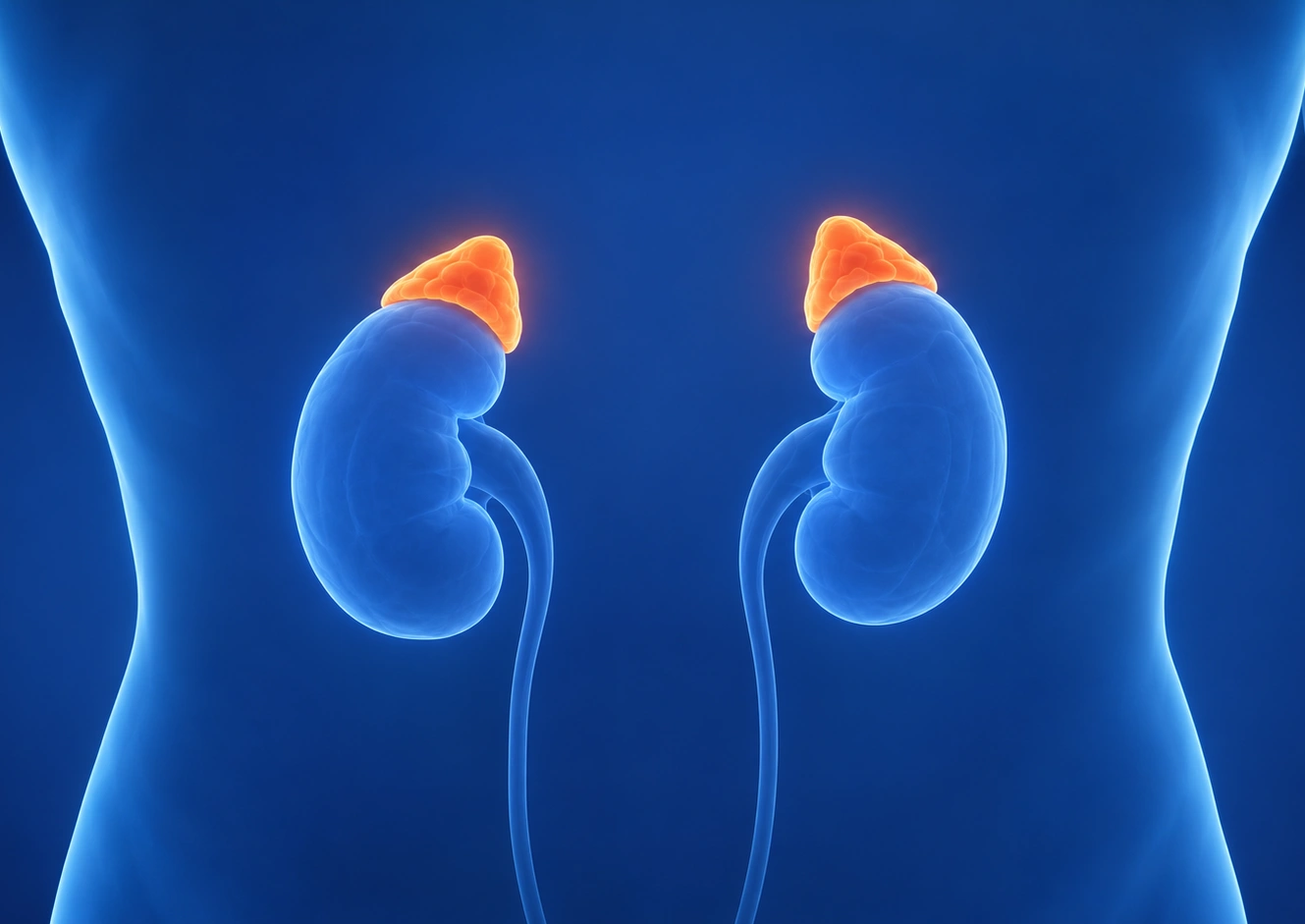
Congenital Adrenal Hyperplasia is a group of inherited conditions that affect the adrenal glands, which sit on top of your kidneys.¹ These glands make three main types of hormones:¹
- Corticosteroids, such as cortisol, which help the body respond to illness or injury
- Mineralocorticoids, such as aldosterone, which balance salt and water
- Androgens, sex hormones such as testosterone
With 21-Hydroxylase Deficiency, the body doesn't make enough of an enzyme called 21-hydroxylase. The body needs this enzyme to produce two hormones, cortisol and aldosterone.³ As a result, the body produces extra androgens, which cause many of the condition's symptoms .¹ The condition has two main forms: classic and nonclassic.³
Classic CAH is the more serious form, and it's typically diagnosed in infancy.⁴ It has two types:
- Salt-wasting: About 75% of people with classic CAH also don't make enough aldosterone, so the body has trouble holding on to salt and water. Without treatment, this can lead to dehydration, vomiting, and low blood pressure.¹
- Simple virilizing: Most people with this type don’t regularly experience trouble maintaining a normal salt and water balance.¹
Girls with classic CAH are often born with external genitalia that looks different than expected, however their internal reproductive organs are typical.¹ Most boys show no signs at birth.⁴ Without early treatment, children may start puberty early and grow quickly at first, then stop growing sooner than expected. This can lead to a shorter adult height.¹
Nonclassic CAH is milder and isn't life-threatening. Signs can appear anytime from early childhood through early adulthood and can include:
- Early body hair or acne in children¹
- Excess facial or body hair, irregular periods, and acne in teen girls¹
- Symptoms that resemble Polycystic Ovary Syndrome (PCOS) in young women⁴
Some people with nonclassic CAH have trouble getting pregnant.¹
Classic CAH is a lifelong condition, and it can be effectively treated. Treatment starts soon after birth and usually includes daily medicines that replace the hormones the body can't make on its own. With this care, people with classic CAH can have normal, fulfilling lives.¹
CYP21A2
CYP21A2 is the gene this screen associated with 21-Hydroxylase Deficient CAH.¹
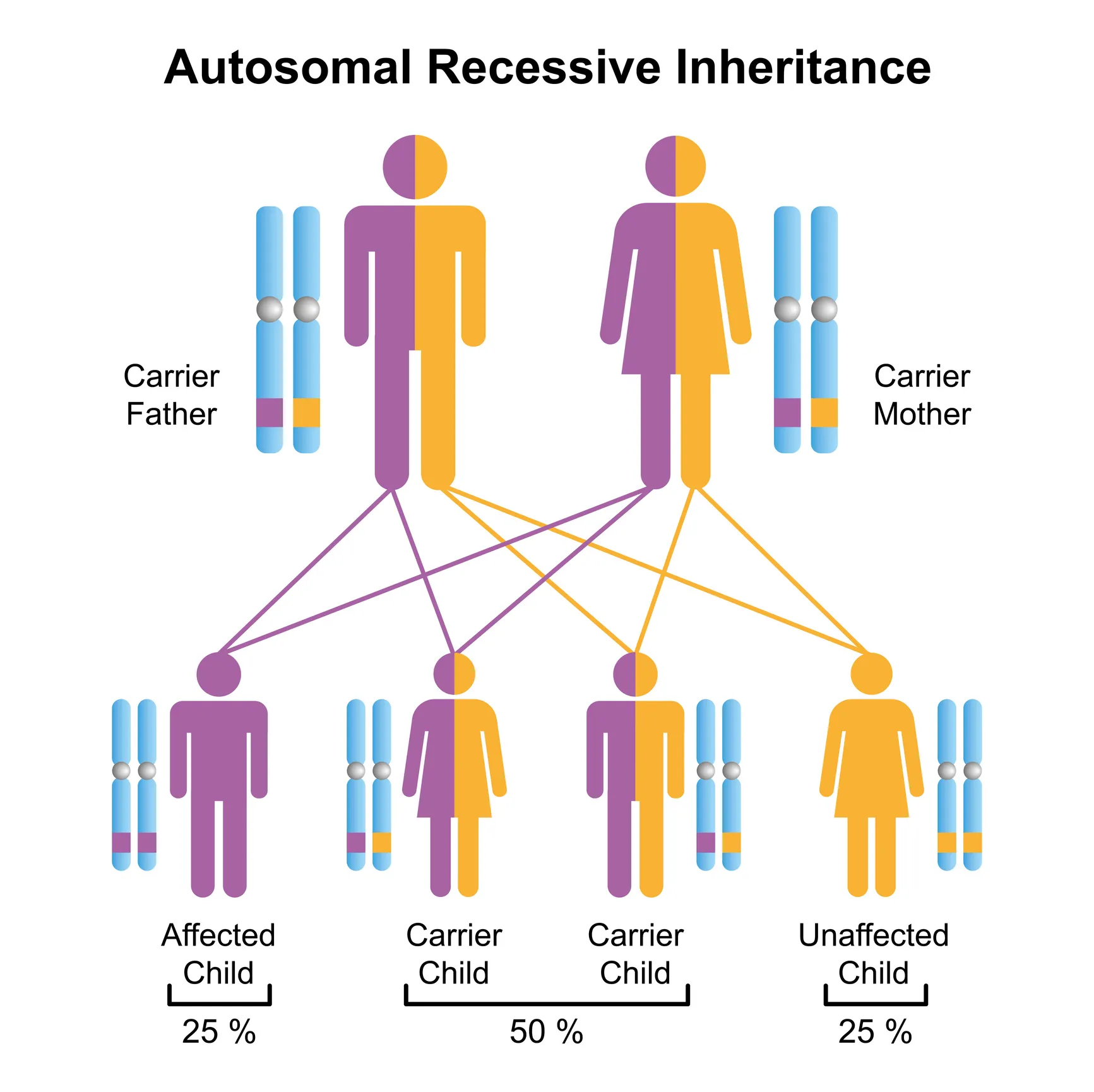
21-Hydroxylase Deficiency follows an autosomal recessive pattern. This means a child has to inherit a mutated copy of the gene from each parent to be affected. If you have one working copy and one mutated copy, you're a carrier, and you usually won't have symptoms.¹
If both parents are carriers, each pregnancy has:¹
- A 25% chance the child inherits a mutated copy from each parent and is affected
- A 50% chance the child is a carrier, like the parents
- A 25% chance the child inherits two working copies and is unaffected and is not a carrier
Not every CYP21A2 mutation has the same effect. Different mutations leave the body with different amounts of the enzyme, which is why the condition ranges from mild to more serious.¹ When a child inherits two different mutations, the milder one typically determines which form of CAH the child has.³
Why 21-Hydroxylase Deficiency Carrier Screening Matters

Carriers usually have no symptoms, so there's often no outward sign that you could pass a genetic mutation on to a child.¹ CYP21A2 mutations are also common; In some populations, close to 5% of people (about 1 in 21) are carriers.⁶ The American College of Medical Genetics and Genomics (ACOG) recommends offering carrier screening to everyone who is pregnant or planning a pregnancy, and CYP21A2 is one of the genes on its list.⁶
Your Odds of Carrying a CYP21A2 Genetic Mutation
Your chance of carrying a CYP21A2 mutation depends partly on your ancestry. Across the general population, nonclassic CAH affects about 1 in 1,000 people, but in certain ethnic groups, it can be as common as 1 in 100 to 1 in 200.⁴ Classic CAH occurs in about 1 in 10,000 to 25,000 births worldwide.²
Rates are higher in several communities. Note that some figures describe people who have nonclassic CAH, some describe carriers, and some describe babies born with classic CAH:
up to 1 in 27 people have nonclassic CAH, and as many as 1 in 3 may be carriers²
about 1 in 53 people have nonclassic CAH²
about 1 in 62 people have nonclassic CAH²
about 1 in 300 people have nonclassic CAH²
about 1 in 10 people carry a mutation linked to nonclassic CAH²
About 1 in 5,000 to 7,000 babies are born with classic CAH, compared with about 1 in 15,000 to 25,000 births in Southern Europe²
CAH is more common in these groups in the United States, and the salt-wasting form may affect as many as 1 in 282 Yupik people1,4
Who Should Consider Screening
21-Hydroxylase Deficiency screening may be especially worth considering if any of these apply to you:
Ashkenazi Jewish Ancestry
With up to 1 in 27 Ashkenazi Jewish people affected by nonclassic CAH and as many as 1 in 3 carrying a mutation, your heritage alone is a good reason to screen, even if no one in your family has been diagnosed.² It's one of several Ashkenazi Jewish genetic diseases included in carrier screening.
Hispanic Heritage
About 1 in 53 Hispanic people have nonclassic CAH.² Because carriers usually have no symptoms, screening is the clearest way to know whether you carry a CYP21A2 mutation.
Mediterranean, Balkan, Middle Eastern, or North African Roots
Rates vary widely across these regions. If your family has roots in Italy, Cyprus, the former Yugoslavia, North Africa, or the Middle East, carrier screening can tell you your carrier status before you start or grow your family.
Yupik or Native American Heritage
CAH is more common among Native American and Yupik people in the United States.⁴ Among Yupik people, the salt-wasting form may affect as many as 1 in 282.¹ Knowing your carrier status before pregnancy gives your family time to plan.
Planning a Pregnancy
Learning your carrier status before you conceive gives you and your partner time to talk through your options with a genetic counselor. Here's more on why screening before pregnancy matters.
A Partner Who Carries a CYP21A2 Mutation
A child can only be affected when both biological parents pass on a mutated copy of CYP21A2.¹ If your partner has already screened positive, your result is the missing piece. Some mutations are linked to classic CAH and others to the milder form, so knowing both results helps a genetic counselor explain what that could mean for a future child.³
Using a Sperm or Egg Donor
With carrier rates close to 5% in some populations, it's worth checking a donor's CYP21A2 carrier status alongside your own, as donors carry the same genetic considerations a partner would.⁶
Irregular Periods, Excess Hair Growth, or Fertility Challenges
Nonclassic CAH can cause excess facial or body hair, irregular periods, and acne, and its signs can resemble PCOS.¹,⁴ If you or a close relative has these signs without a clear explanation, mention them to a genetic counselor. Experts recommend offering genetic counseling to people diagnosed with nonclassic CAH and to anyone planning a pregnancy.⁴
How At-Home Genetic Testing Works

Order and register

Collect your sample

Return your sample

Get your results

Talk to a genetic counselor
Costs and Insurance Coverage
Insurance Billing
Self-Pay Option
Understanding Your Results
Positive (Carrier)

A positive result means you carry one working copy and one mutated copy of CYP21A2. You aren't affected by 21-Hydroxylase deficiency, and never will be, but you could pass the mutated copy to a child. If you're planning a pregnancy, it is important for your partner to be screened too, since your child's risk depends on whether your partner also carries a CYP21A2 mutation.
Negative Result

A negative result means you have a significantly lower chance of being a carrier for 21-Hydroxylase deficiency.
If You and Your Partner Are Both Carriers
If you and your partner both carry a CYP21A2 mutation, each pregnancy has the following risks: a 25% chance of having a child affected with 21-Hydroxylase deficiency, a 50% chance of having a child who is a carrier like the parents, and a 25% chance of having a child who is unaffected and is not a carrier.¹ Whether that would mean classic or nonclassic CAH depends on the specific mutations each of you carries.³ When a carrier couple is identified, jscreen recommends speaking with a genetic counselor who can walk you through what your results mean and which options fit your family. If you're already pregnant, chorionic villus sampling (CVS) in the first trimester can check to see if the pregnancy is affected.¹ If you're planning to use IVF, preimplantation genetic testing (PGT) can test embryos before transfer.⁴
Know Your Carrier Status Before You Grow Your Family
Frequently Asked Questions
What Is Congenital Adrenal Hyperplasia Genetic Testing?
Congenital Adrenal Hyperplasia genetic testing through jscreen is a carrier screen that checks CYP21A2, the gene that causes 21-Hydroxylase Deficient CAH.¹ It shows whether you carry a genetic mutation you could pass to a child, which is most useful to know before pregnancy. For a full walkthrough, see our complete guide to carrier screening.
What Are Other Names for 21-Hydroxylase Deficient CAH?
You may see this condition called 21-Hydroxylase Deficiency, or 21OHD for short.³ Classic CAH includes the salt-wasting type, sometimes called salt-losing CAH, and the simple virilizing type.¹ Nonclassic CAH is also known as late-onset CAH, adult-onset CAH, or attenuated CAH.⁵
What Does It Mean to Be a CAH Carrier?
Being a carrier of Congenital adrenal hyperplasia, sometimes called a 21-hydroxylase deficiency carrier, means you have one mutated copy of CYP21A2 and one working copy. Carriers usually don't have symptoms.¹ Your carrier status matters most for family planning, since a child is only affected when both parents pass on a mutated copy.¹
Can You Have Nonclassic CAH Without Knowing It?
Yes. Some people live their whole lives with nonclassic CAH without symptoms that affect their quality of life.⁵ Many men with nonclassic CAH go undiagnosed, and when they are diagnosed, it's usually through family screening.³
Can Nonclassic CAH Turn Into Classic CAH?
Nonclassic CAH isn't expected to turn into classic CAH.⁵ It's a milder form of the condition caused by milder mutations that leave the body with more working enzyme.¹
How Do Doctors Test for Congenital Adrenal Hyperplasia?
For newborns, the CAH screening test measures a hormone called 17-hydroxyprogesterone (17-OHP) in a dried blood spot.3,4 Later in life, an endocrinologist usually confirms CAH with blood hormone tests. Genetic testing may be used if those results aren't clear.¹ Carrier screening is different. It checks whether you carry a CYP21A2 mutation before a child is ever affected.
Can People With CAH Live a Normal Life?
Yes. With the right care and treatment, people with CAH can go on to lead normal lives.¹ Newborn screening helps the vast majority of babies with classic CAH start treatment early.¹
Are There New Treatments for Congenital Adrenal Hyperplasia?
Yes. In December 2024, the US Food and Drug Administration (FDA) approved crinecerfont (Crenessity) for adults and children 4 years and older with classic CAH.⁷ It's taken along with standard steroid medicines and works by lowering the body's extra androgen production. This can help reduce the amount of steroid treatment needed.⁷
Is genetic counseling included in the jscreen process?
Genetic counseling is strongly recommended for all jscreen patients. Every test through jscreen includes a complimentary consultation with a board-certified genetic counselor, who can explain the results and options for moving forward.
I’ve already done carrier screening. How do I know if more testing is needed?
Carrier screening is recommended for anyone planning a pregnancy, even if they already have children. As testing panels get updated over time, it is recommended that testing is up-to-date prior to all pregnancies. jscreen genetic counselors are available to review prior testing and assess whether updated testing may be advised.
References
- Congenital Adrenal Hyperplasia. National Organization for Rare Disorders (NORD). Last updated June 8, 2023. Accessed October 21, 2026.
https://rarediseases.org/rare-diseases/congenital-adrenal-hyperplasia/ - Fanis P, Skordis N, Tomazou M, Phylactou LA, Neocleous V. Congenital adrenal hyperplasia in the Mediterranean: a concise overview. Pharmaceuticals (Basel). 2026;19(5):741. doi:10.3390/ph19050741. https://pmc.ncbi.nlm.nih.gov/articles/PMC13210843/
- Concolino P, Falhammar H. Genetics in congenital adrenal hyperplasia due to 21-hydroxylase deficiency and clinical implications. J Endocr Soc. 2025;9(3):bvaf018. doi:10.1210/jendso/bvaf018. https://pmc.ncbi.nlm.nih.gov/articles/PMC11795198/
- Sharma L, Singh G. Congenital adrenal hyperplasia. In: StatPearls. StatPearls Publishing; 2025. Updated January 27, 2025. Accessed October 21, 2026.
https://www.ncbi.nlm.nih.gov/books/NBK448098/ - Non-Classical CAH. CARES Foundation. Last modified June 23, 2025. Accessed October 21, 2026.
https://caresfoundation.org/what-is-cah-non-classical/ - Gregg AR, Aarabi M, Klugman S, et al. Screening for autosomal recessive and X-linked conditions during pregnancy and preconception: a practice resource of the American College of Medical Genetics and Genomics (ACMG). Genet Med. 2021;23(10):1793-1806.
https://pmc.ncbi.nlm.nih.gov/articles/PMC8488021/ - FDA approves new treatment for congenital adrenal hyperplasia. US Food and Drug Administration. December 13, 2024. Accessed October 21, 2026. https://www.fda.gov/news-events/press-announcements/fda-approves-new-treatment-congenital-adrenal-hyperplasia