


Sickle Cell Disease and Beta Thalassemia Screening


Sickle Cell Disease and Beta Thalassemia are inherited conditions that affect hemoglobin, the protein in red blood cells that carries oxygen.¹,² Both are caused by mutations in the same gene, HBB.³ Sickle Cell Disease affects about 100,000 people in the United States, and about 1 in 13 Black or African American babies is born with sickle cell trait.⁴ Beta Thalassemia is most common in people of Mediterranean, Middle Eastern, and Asian descent.⁵ Carriers usually have no symptoms, so many people don't know they could pass a genetic mutation on to a child.⁶,⁷ Screening through jscreen checks the HBB gene for these mutations ahead of time, so you can understand your risk before pregnancy, or as early as possible if you're already expecting.
What Are Sickle Cell Disease and Beta Thalassemia?
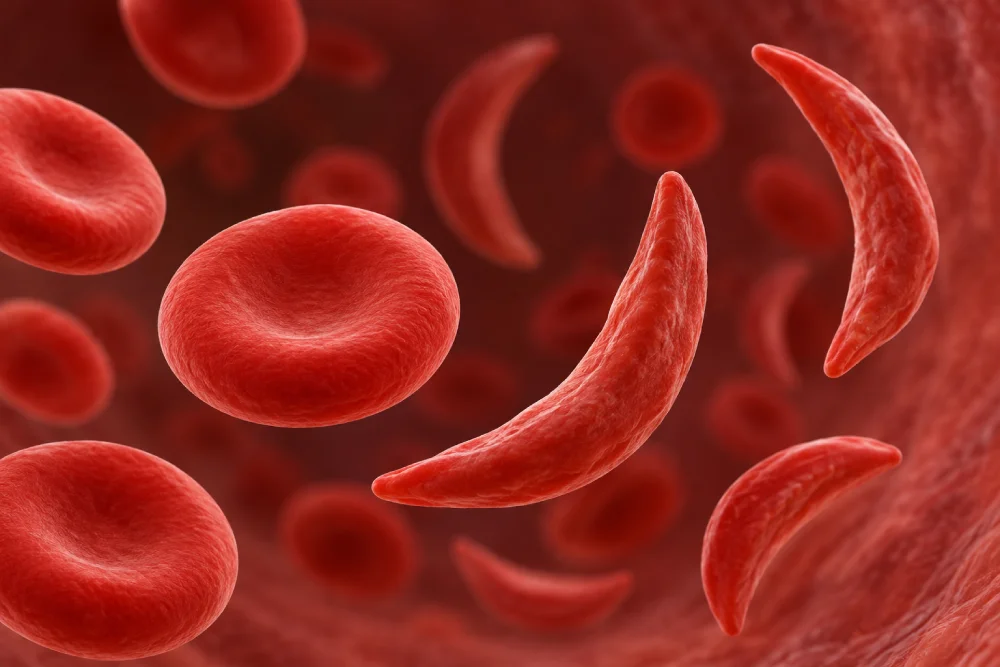
With Sickle Cell Disease, the body makes an abnormal form of hemoglobin. This causes red blood cells to become hard and sticky and take on a curved, sickle shape.¹ Sickle cells die early, which leads to a shortage of red blood cells. They can also get stuck in small blood vessels and block blood flow, which can cause pain and other health problems, such as infection and stroke.¹ Signs often begin in the first year of life, usually around 5 months of age, and can range in severity.¹
Sickle Cell Disease has several types. Among the most common, HbSS is usually the most severe form.¹ HbSC is usually milder.¹ Another type, HbS beta thalassemia, happens when a child inherits a sickle cell mutation from one parent and a beta thalassemia mutation from the other.¹
With Beta Thalassemia, the body doesn't make enough beta globin, one of the protein chains that make up hemoglobin.⁷ This can lead to anemia, a shortage of healthy red blood cells that can cause tiredness, weakness, and shortness of breath.² Beta thalassemia intermedia causes moderate anemia, while beta thalassemia major causes more serious symptoms.⁷ More serious types of thalassemia are usually diagnosed before a child is 2 years old.²
Care for both conditions keeps improving. For Sickle Cell Disease, several medicines can help prevent or reduce pain crises and other complications, and bone marrow transplants and new gene therapies are options for some people.¹ In December 2023, the FDA approved the first gene therapies for Sickle Cell Disease for people 12 and older.⁸ Beta Thalassemia is a lifelong condition, and people are now living with it longer and with a better quality of life.²
HBB
HBB is the gene associated with both Sickle Cell Disease and Beta Thalassemia. It gives instructions for making beta globin, a key part of hemoglobin.⁷ Different mutations in HBB lead to different conditions.³ The sickle cell mutation is a single change in HBB that alters the beta globin protein. Other HBB mutations lower how much beta globin the body makes, which causes Beta Thalassemia.⁷,9
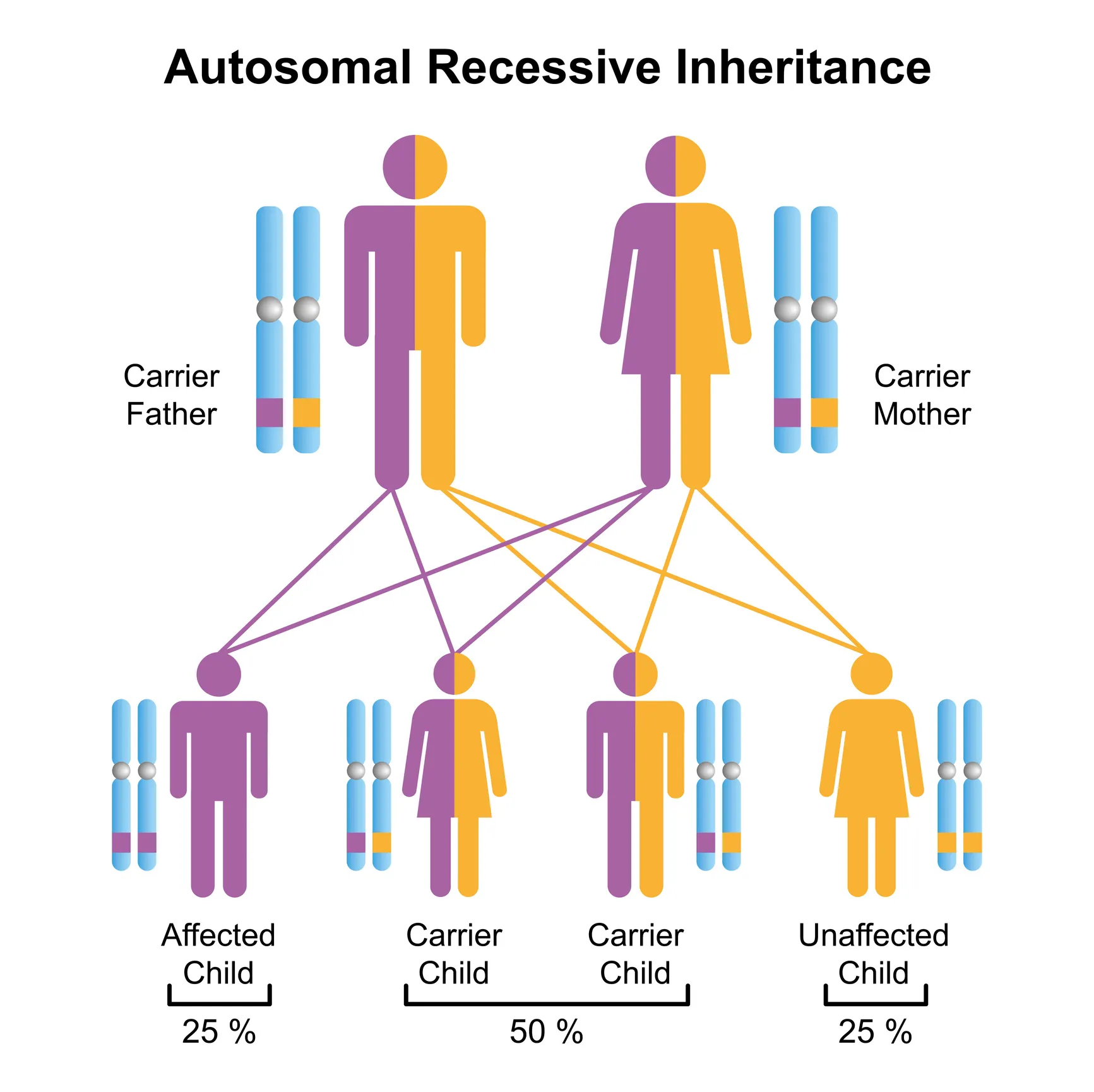
Both conditions are inherited in an autosomal recessive pattern. A child has to inherit a mutated copy of HBB from each parent to be affected.⁷ If you have one mutated copy, you’re a carrier, which is called sickle cell trait or beta thalassemia trait, depending on the mutation. People with sickle cell trait usually don't have symptoms, and people with beta thalassemia trait may have mild anemia.⁶,⁷
If both parents carry a mutation in HBB, each pregnancy has:
- A 25% chance the child inherits a mutated copy from each parent and is affected
- A 50% chance the child is a carrier, like the parents
- A 25% chance the child inherits two working copies
Because both conditions involve the same gene, the combination matters. If one parent has sickle cell trait and the other has beta thalassemia trait, a child can inherit HbS beta thalassemia, a form of Sickle Cell Disease.¹ That's why it’s important you and your partner know exactly which mutation each of you carries.
Why Sickle Cell Disease and Beta Thalassemia Carrier Screening Matters

HBB mutations are common. Data from the American College of Medical Genetics and Genomics (ACMG) show HBB carrier rates as high as about 12% (roughly 1 in 8) in some populations, among the highest of any gene it reviewed ³ People with sickle cell trait usually don't have symptoms, and beta thalassemia carriers often have no signs of illness or only mild anemia, making carrie screening the most reliable way to know your carrier status.⁶,⁷ The ACMG recommends offering carrier screening to everyone who is pregnant or planning a pregnancy.³
Carrier screening answers the question of whether you and your partner could pass an HBB condition to a child, and screening before you conceive gives you the clearest picture of your risk and the most time to plan.
Your Odds of Carrying an HBB Genetic Mutation
Your chance of carrying an HBB mutation depends partly on your ancestry. Sickle Cell Disease is especially common in people whose ancestors came from parts of the world including Sub-Saharan Africa, Spanish-speaking regions of the Western Hemisphere, Saudi Arabia, India, and Mediterranean countries such as Turkey, Greece, and Italy.⁴ Beta Thalassemia occurs most often in people of South Asian, Italian, Greek, Middle Eastern, and African descent.⁷
Here's what the numbers look like. Note that some figures describe carriers and others describe babies born with the condition:
- Black or African American: about 1 in 13 babies is born with sickle cell trait (carriers), and about 1 in 365 babies is born with Sickle Cell Disease.4
- Hispanic American: About 1 in 16,300 babies is born with Sickle Cell Disease.4
- Cyprus: up to 15% of people in the Greek and Turkish populations are beta thalassemia carriers.
- Worldwide: about 80 to 90 million people, around 1.5% of the global population, are beta thalassemia carriers.5
Who Should Consider Screening
While everyone should pursue carrier screening prior to a pregnancy, HBB carrier screening may be especially helpful if any of these apply to you:
African or Caribbean Ancestry
Sickle cell trait is common in people with African ancestry.4 About 1 in 13 Black or African American babies is born with sickle cell trait.⁴ If your family has roots in Africa or the Caribbean, screening can tell you whether you carry an HBB mutation, even if no one in your family has been diagnosed.
Hispanic or Latino Heritage
Sickle Cell Disease is also more common in people with roots in Spanish-speaking regions of South America, Central America, and the Caribbean.⁴ Screening helps you understand your risk before you start or grow your family.
Mediterranean, Middle Eastern, or South Asian Roots
Beta Thalassemia occurs most often in people of South Asian, Italian, Greek, and Middle Eastern descent.⁷ Learn more about genetic testing for people of all backgrounds.
Planning a Pregnancy
Newborn screening finds Sickle Cell Disease after a baby is born.¹ Learning your carrier status before you conceive gives you and your partner time to talk through your options with a genetic counselor. Here's more on why screening before pregnancy matters.
A Partner With Sickle Cell Trait or Beta Thalassemia Trait
If your partner already knows they carry an HBB mutation, your result is the missing piece of your risk if you’re a couple considering conceiving. Because a sickle cell mutation and a beta thalassemia mutation together can cause HbS beta thalassemia, it's important to know your status even if your partner's trait is a different type.¹
Using a Sperm or Egg Donor
A donor carries the same genetic considerations a partner would. With HBB carrier rates reaching about 1 in 8 in some populations, it's worth knowing a donor's HBB carrier status alongside your own.³
A Personal or Family History of Mild Anemia
Beta thalassemia carriers may have mild anemia.⁷ If you or a close relative has mild anemia without a clear cause, mention it to a genetic counselor.
How Screening Works

Order Your Kit
Register online and receive a saliva collection kit shipped directly to your home within a few days.

Collect Your Sample
Provide a simple saliva sample at home, following the easy step by step instructions included in your kit.

Lab Analysis
Your sample is analyzed at a CLIA-accredited laboratory using advanced sequencing technology.

Receive Results
Receive your results within 3 to 4 weeks. You can choose to schedule a complimentary consultation with a certified genetic counselor to review your findings.
Costs and Insurance Coverage
Insurance Billing
Self-Pay Option
Understanding Your Results
Positive (Carrier)

A positive result means you carry one working copy and one mutated copy of HBB. This is often called sickle cell trait or beta thalassemia trait, depending on the mutation. Carrying one copy doesn't mean you have Sickle Cell Disease or Beta Thalassemia, but you can pass the mutated copy on to a child. If you're planning a pregnancy, your partner should also be screened , since your child's risk depends on whether your partner also carries an HBB mutation.
Negative Result

A negative result means you have a significantly lower chance of being a carrier for Sickle Cell Disease or Beta Thalassemia. It greatly reduces your risk, though it can't bring it all the way to zero.
If You and Your Partner Are Both Carriers
If you and your partner both carry an HBB mutation, each pregnancy has a 25% chance of being affected.⁶,⁷ Depending on the mutations you each carry, that could mean Sickle Cell Disease, Beta Thalassemia, or HbS beta thalassemia.¹ If you're already pregnant, chorionic villus sampling (CVS) or amniocentesis can check the pregnancy for these conditions.¹ Genetic counseling is strongly recommended for carrier couples.⁵ Every jscreen result comes with access to a board-certified genetic counselor who can walk you through what your results mean and which options fit your family.
Plan for Your Family's Future Today
Frequently Asked Questions
What Is a Sickle Cell Trait Test?
A sickle cell trait test shows whether you carry one copy of the sickle cell mutation. Sickle cell trait is often diagnosed with a simple genetic test.⁶ Through jscreen, the carrier screen uses a saliva sample collected at home and checks the HBB gene. For a full walkthrough of the process, see our complete guide to carrier screening.
What Are Other Names for These Conditions?
The HbSS type of Sickle Cell Disease is commonly called Sickle Cell Anemia.¹ Beta thalassemia trait is also called beta thalassemia minor, and beta thalassemia major is also called Cooley's Anemia.⁷
Can You Have Sickle Cell Trait and Not Know It?
Yes. People with sickle cell trait usually don't have any symptoms of Sickle Cell Disease, but they can pass the trait on to their children.⁶ Carrier screening is a simple way to find out.
Does Sickle Cell Trait Cause Health Problems?
Most people with sickle cell trait don't have any symptoms of Sickle Cell Disease.⁶ In rare cases, problems can happen when the body is under extra stress, such as dehydration or very intense exercise.¹ Simple steps like drinking plenty of water and building up exercise slowly can help.⁶
Is There a Cure for Sickle Cell Disease or Beta Thalassemia?
There isn’t a universal cure, but the good news is that treatment keeps advancing. For some people with Sickle Cell Disease, bone marrow transplants and new gene therapies may be an option.¹ For Beta Thalassemia, bone marrow and cord blood transplants offer a potential cure.⁵ A care team can help decide what fits each person best.
How Much Does Sickle Cell Screening Cost?
Most commercial insurance plans cover carrier screening for people planning to start or expand their family. If you choose to self-pay, the jscreen carrier screen costs $249 plus a $49 upfront fee, for a total of $298.
References
- About Sickle Cell Disease. Centers for Disease Control and Prevention. Updated August 7, 2026. Accessed October 21, 2026.
https://www.cdc.gov/sickle-cell/about/index.html - What Is Thalassemia? National Heart, Lung, and Blood Institute. Last updated May 31, 2022. Accessed October 21, 2026.
https://www.nhlbi.nih.gov/health/thalassemia - Gregg AR, Aarabi M, Klugman S, et al. Screening for autosomal recessive and X-linked conditions during pregnancy and preconception: a practice resource of the American College of Medical Genetics and Genomics (ACMG). Genet Med. 2021;23(10):1793-1806.
https://pmc.ncbi.nlm.nih.gov/articles/PMC8488021/ - Data and Statistics on Sickle Cell Disease. Centers for Disease Control and Prevention. Updated August 7, 2026. Accessed October 21, 2026.
https://www.cdc.gov/sickle-cell/data/index.html - Needs T, Gonzalez-Mosquera LF, Lynch DT. Beta thalassemia. In: StatPearls. StatPearls Publishing; 2023. Updated May 1, 2023. Accessed October 21, 2026.
https://www.ncbi.nlm.nih.gov/books/NBK531481/ - What Is Sickle Cell Trait? Centers for Disease Control and Prevention. Updated May 15, 2024. Accessed October 21, 2026.
https://www.cdc.gov/sickle-cell/sickle-cell-trait/index.html - Thalassemia: Causes. National Heart, Lung, and Blood Institute. Last updated June 1, 2022. Accessed October 21, 2026.
https://www.nhlbi.nih.gov/health/thalassemia/causes - FDA approves first gene therapies to treat patients with sickle cell disease. US Food and Drug Administration. December 8, 2023. Accessed October 21, 2026.
https://www.fda.gov/news-events/press-announcements/fda-approves-first-gene-therapies-treat-patients-sickle-cell-disease - Mangla A, Agarwal N, Maruvada S. Sickle cell anemia. In: StatPearls. StatPearls Publishing; 2023. Updated September 4, 2023. Accessed October 21, 2026.
https://www.ncbi.nlm.nih.gov/books/NBK482164/