





Why Genetic Testing Matters for Endocrine Cancer
The endocrine system relies on glands throughout the body, including the thyroid, parathyroid, adrenal glands, and pancreas, to regulate vital hormones. While many endocrine tumors occur randomly, some are passed down through families. When an inherited gene change is responsible, tumors often show up earlier in life, appear in more than one gland, or affect both sides of the body.
A hereditary cancer test designed to assess the risk of endocrine cancer helps spot the gene changes most strongly linked to these conditions. By learning your risk early, you and your doctor can put a personalized monitoring plan in place long before symptoms ever appear, optimizing your chance of better health outcomes.
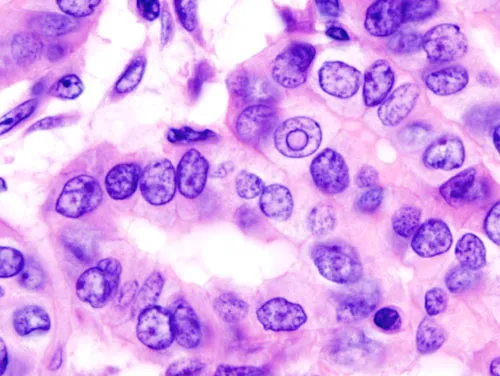
Understand Your Hereditary Risk
About 5 to 10% of thyroid cancer cases – the most common type of endocrine cancer – are linked to an inherited gene change.¹ That number climbs even higher for medullary thyroid cancer, as well as for people with tumors in multiple endocrine glands.¹
Hereditary endocrine cancer often behaves differently than cases that develop later in life without a family connection. It tends to show up at a younger age, affect multiple glands, or appear on both sides of the body at once – such as both adrenal glands or all four parathyroid glands.² Taking a genetic test for endocrine cancer can highlight these inherited risks long before a tumor ever develops, allowing you and your doctor to start imaging and blood work earlier and monitor your health more closely when needed.
The Main Hereditary Endocrine Cancer Syndromes
Most hereditary endocrine cancers stem from a handful of well-studied syndromes. Each can be identified through genetic testing, helping you and your doctor create a personalized monitoring plan.
Multiple Endocrine Neoplasia Type 1 (MEN1)
Caused by an inherited change in the MEN1 gene, nearly everyone with MEN1 develops a parathyroid gland tumor at some point. Additionally, about 40% will develop a pituitary tumor, and a similar share will develop a pancreatic neuroendocrine tumor.³ These tumors can be either benign or cancerous.
Multiple Endocrine Neoplasia Type 2 (MEN2)
Caused by a change in the RET gene, MEN2 leads to medullary thyroid cancer in almost everyone affected. About half of people with the MEN2A subtype also develop pheochromocytoma, a type of adrenal gland tumor.⁴ Because the risk of thyroid cancer is so high and predictable, early genetic testing allows families to take preventive action.
Hereditary Paraganglioma Pheochromocytoma Syndrome
Caused by changes in genes like MAX, SDHA, SDHAF2, SDHB, SDHC, SDHD, or TMEM127, this syndrome increases the risk of tumors growing from nerve tissue near the adrenal glands and along the spine.⁵ For example, individuals with an SDHB gene change face a 24% to 58% chance of developing one of these tumors by age 60, alongside an elevated risk for kidney cancer.⁵
Von Hippel Lindau (VHL) Disease
Caused by an inherited change in the VHL gene, over a lifetime, people with von Hippel-Lindau disease face a 97% chance of developing VHL-related cancer or health complications. These can include clear cell renal carcinoma, pancreatic neuroendocrine tumors, pheochromocytomas, brain and spinal tumors, tumors of the eye, and adrenal gland cancers.⁶
Who Should Consider Hereditary Endocrine Cancer Testing?
A personal or family history of cancer, especially rare types of cancer, can be the first clue that you face an increased risk due to an inherited mutation. Consider hereditary endocrine cancer testing if you meet any of the following criteria:
A Diagnosis of Medullary Thyroid Cancer
Family History of Endocrine Tumors or Cancer
Personal or Family History of Pheochromocytoma or Paraganglioma
Primary Hyperparathyroidism at a Young Age or in Multiple Glands
Key Genes Linked to Hereditary Endocrine Cancer
Simple, from Home to Results

Order Your Kit
Register online and receive a saliva collection kit shipped directly to your home within a few days.

Collect Your Sample
Provide a simple saliva sample at home, following the easy step-by-step instructions included in your kit.

Lab Analysis
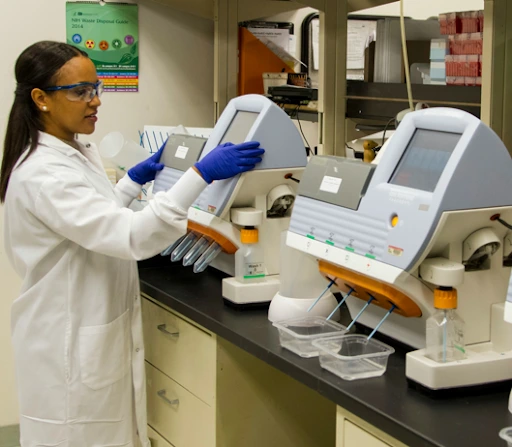
Your sample is analyzed at a CLIA-accredited laboratory using advanced sequencing technology across the full gene panel.

Receive Results
Receive your results within 3 to 4 weeks. You can choose to schedule a complimentary consultation with a certified genetic counselor to review your findings.
Costs and Insurance Coverage
Insurance Billing
Self-Pay Option
While endocrine cancer can run in families, understanding your personal risk empowers you to stay ahead of it.
References
2. Hereditary paraganglioma pheochromocytoma syndrome. Children's Hospital of Philadelphia. Accessed July 16, 2026. https://www.chop.edu/conditions-diseases/hereditary-paraganglioma-pheochromocytoma-syndrome
3. Progress report on multiple endocrine neoplasia type 1. Fam Cancer. Published online January 2025. Accessed July 16, 2026. https://pmc.ncbi.nlm.nih.gov/articles/PMC11742904/
4. A new MEN2 syndrome with clinical features of both MEN2A and MEN2B associated with a new RET germline deletion. Published 2020. Accessed July 16, 2026. https://www.ncbi.nlm.nih.gov/pmc/articles/PMC7411486/
5. Hereditary paraganglioma-pheochromocytoma syndromes. In: GeneReviews. NCBI Bookshelf; updated September 2023. Accessed July 16, 2026. https://www.ncbi.nlm.nih.gov/books/NBK1548/
6. Experimental and Therapeutic Medicine. Spandidos Publications. October 2025. Accessed July 16, 2026. https://www.spandidos-publications.com/10.3892/etm.2025.12940
7. Multiple endocrine neoplasia type 2 (MEN2) (PDQ): health professional version. National Cancer Institute. Updated February 2025. Accessed July 16, 2026. https://www.cancer.gov/publications/pdq/information-summaries/genetics/men2-hp-pdq
8. Cancer genetics risk assessment and counseling (PDQ): health professional version. National Cancer Institute. Updated February 2026. Accessed July 16, 2026. https://www.cancer.gov/publications/pdq/information-summaries/genetics/risk-assessment-hp-pdq
9. A family case report of parathyroid carcinoma associated with CDC73 mutation in hyperparathyroidism-jaw tumor syndrome. Front Endocrinol. Published January 2024. Accessed July 16, 2026. https://www.frontiersin.org/journals/endocrinology/articles/10.3389/fendo.2024.1330185/full
10. Cowden syndrome. American Cancer Society. Accessed July 16, 2026. https://www.cancer.org/cancer/risk-prevention/genetics/family-cancer-syndromes/cowden-syndrome.html
11. Familial adenomatous polyposis (FAP): symptoms, diagnosis, risks. Cleveland Clinic. Updated December 2025. Accessed July 16, 2026. https://my.clevelandclinic.org/health/diseases/16993-familial-adenomatous-polyposis-fap
12. Hyperparathyroidism jaw tumor syndrome. MedlinePlus Genetics. Accessed July 16, 2026. https://medlineplus.gov/genetics/condition/hyperparathyroidism-jaw-tumor-syndrome/
13. DICER1 syndrome and cancer predisposition: from a rare pediatric tumor to lifetime risk. Published 2021. Accessed July 16, 2026. https://www.ncbi.nlm.nih.gov/pmc/articles/PMC7859642/